
Professional Evidence Framework
REALSUCC distinguishes methodology, tools, practice scenarios, authorized client case studies and product evidence, and uses the form of evidence that matches the professional claim being made.
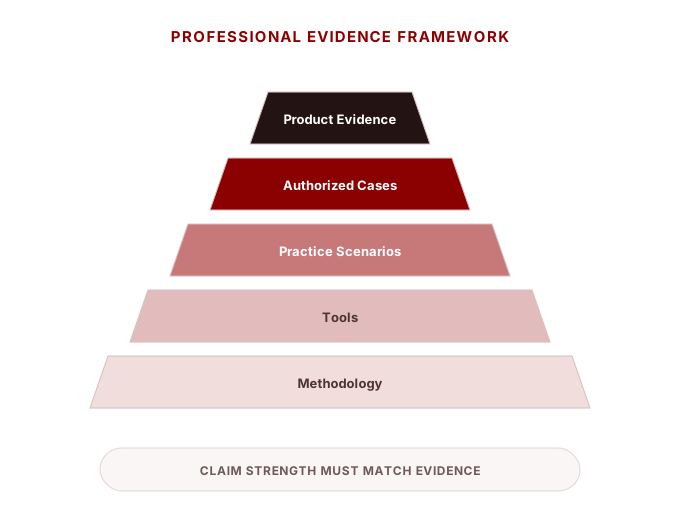
Evidence is not one thing
Different claims require different evidence. A methodology can show how we reason; a tool can show how that reasoning is operationalized; a case can show how it worked in context; a product artefact can show that a design is implementable.
Methodology Evidence
Shows how payment quality is defined, assessed, reviewed and controlled through structured frameworks such as HQPI, PIMM, PARS and PQG.
Explore →02Tools & Assessment Evidence
Turns methods into checklists, self-assessments and structured diagnostic work that can be applied to a real environment.
Explore →03Practice Scenario Evidence
Shows how recurring payment problems can be diagnosed from symptoms to root causes, target state and next actions. It is illustrative, not a client claim.
Explore →04Client Case Study Evidence
Uses authorized, supportable facts from real engagements. Client cases are published only when disclosure is appropriate and permission is in place.
Explore →05Product Evidence
Uses product architecture, core object models, integration patterns and deployment boundaries to demonstrate implementability.
Explore →How evidence should be read
Professional evidence is strongest when the claim, supporting material, context and limits are explicit.
What is being asserted or decided.
What facts, artefacts or observations support it.
Where the evidence applies and under what conditions.
What the evidence does not prove or guarantee.
What decision, design or next step the evidence supports.
What you can verify today
REALSUCC publishes several forms of professional evidence now. Authorized client case studies are added only when they can be disclosed accurately and responsibly.
Methodology
Review the frameworks used to define quality, assess maturity, review architecture and control delivery.
View methodology →Tools
Use checklists and self-assessment tools to turn frameworks into practical review steps.
View tools →Cases & Practice Scenarios
See how payment infrastructure problems are structured, diagnosed and translated into action.
View cases →Software Products
Inspect architecture, object models and integration boundaries across deployable payment software.
View software →Client Case Study status: published only where the underlying engagement, facts and disclosure rights can be supported. Practice scenarios are always labelled as such.
Evidence should lead to a decision
The purpose of evidence is not to make the website look credible. It is to help a client decide what is true, what matters, and what should happen next.
Assessment
Use evidence to establish the current state, risk level and priorities before deciding on a larger program.
Architecture & Solution
Use evidence to choose target capabilities, architecture boundaries, controls and implementation sequence.
Software & Implementation
Use product evidence and delivery controls to determine what should be configured, built, integrated or migrated.
Start from evidence, not assumptions
If you need to understand the real condition of a payment platform or validate a proposed direction, start with a structured assessment or project discussion.